Tag Archives: Josephine Matyas

Music museums you don’t want to miss

We love museums and exhibits curated with care. We never pass up a chance to visit one – and some of them are worth more time than we can give them. In no particular order, some of the best we’ve seen include:

B.B. King Museum and Delta Interpretive Center (Indianola, Mississippi) is built onto an old cotton gin where young Riley (that’s his real name) ran a tractor as a boy before evolving into Blues Boy King … and the rest is history. Before his passing in 2015, B.B. King made substantial contributions from his personal archives, and it hugely enhances the experience for the visitor. Indianola is not “on the beaten path” – it’s between Greenwood and Greenville in the Delta – but it’s well worth any detour. We rate this a three-hour museum: it’s text and artifact heavy, including his personal papers, video clips and even his 60s-era tour bus. Musicians will want an extra hour to salivate over the guitars.

Otis Redding Foundation and Mini Museum (Macon, Georgia) keeps burning the flame of this foundational soul singer. The small streetfront exhibit includes memorabilia and newspaper clippings but is the front end for an educational foundation created before Reddings’ 1967 death (age 26) and is lovingly managed by his widow Ms. Zelma Redding and daughter Karla. Look for a big event in the autumn of 2016 to commemorate his legacy on what would have been his 75th birthday. Take a walk to the bronze statue of Redding at Gateway Park in Macon.

STAX Museum of American Soul Music (Memphis, Tennessee) is another text and exhibit-heavy museum with a story that combines tragedy and triumph. Booker T. & the M.G.s were the STAX house band, providing tracks and arrangements for soul and R&B giants including Sam & Dave, Otis Redding, Rufus Thomas, Albert King, Isaac Hayes (also one of the in-house writers), The Staple Singers, Wilson Pickett and countless others. You’ll get a lot more out of this experience if you familiarize yourself with the history of Memphis at the height of the STAX years, which is just before the 1968 assassination of Dr. Martin Luther King Jr.

Sun Studio (Memphis, Tennessee) lays credible claim to being the birthplace of rock ’n’ roll. Give him his due, Sam Phillips had an ear for music and knew talent when it walked through his door. Among the names associated with this modest little recording studio are Jerry Lee “The Killer” Lewis, Roy Orbison, Carl “Blue Suede Shoes” Perkins, Johnny Cash and The King himself, Elvis Presley. This venue is considerably smaller than the STAX Museum, but you too may want to get down on your knees and kiss the X on the floor where, legend has it, Elvis recorded Hound Dog. Bob Dylan did. Purists may want to fondle the guitar amplifier that fell off the roof of the truck – damaging the speaker cone – that became the sound of Ike Turner’s Rocket 88 … the very first rock ’n’ roll song, depending on who you talk to.

The Earl Scruggs Center (Shelby, North Carolina) invites you to leave your banjo jokes at the door and open your mind to the story of this hardscrabble sharecropper’s son who became an international sensation. Scruggs did for the banjo what Jimi Hendrix did for the electric guitar: he showed what was possible. The Center, which opened in early 2014, is a state of the art tribute to the man, his art and the history of Cleveland County. The displays are rich with archives that span several generations, including original instruments, video clips, interviews and very engaging interactive displays (e.g. you can learn to play the banjo through a touchscreen or call up photographic images of musicians from the times). If, at the end of a couple of hours touring this excellent and well organized history of Scruggs’ life, you still feel the need to crack wise with the banjo jokes, you’ll at least have seen the full majesty of the other side. Highly recommended: but give yourself enough time to fully explore all the exhibits and spend some time with the banjo “petting zoo.”

Alabama Music Hall of Fame (Tuscumbia/Muscle Shoals, Alabama) will surprise you – as it did us – with the richness of its musical legacy. To take just a few of the better known names; Hank Williams, Lionel Richie, Martha Reeves, Wilson Pickett, Percy Sledge, Nat King Cole, Emmylou Harris and Jimmie “The Singing Brakeman” Rodgers. Turns out that a lot of great 20th century music – blues, rock, gospel, country, soul, funk and pop – came out of Alabama. In addition to the Hall of Fame portraits there’s a wealth of musical artifacts including early sheet music belonging to W.C. Handy (Father of the Blues) and the Southern Star tour bus belonging to the supergroup, Alabama.

Martin Guitar Factory (Nazareth, Pennsylvania). If you’ve listened to popular music in the last 100 years, you’ve heard a Martin guitar. Probably thousands of them. It is the most widely recorded guitar sound in the world because – for many millions of guitar purists and players – it is THE sound of an acoustic guitar. So you’ll love touring the Martin Guitar Factory in Nazareth, PA, where thousands of these beautiful instruments are lovingly produced for a worldwide market of pickers who grin. The tour takes you right onto the factory floor where you can see up close and personal the artful combination of cutting edge science with old fashioned finger-applied glue on wood. It is more interesting than words can capture, even for non-players, because the Martin sound so defines what the acoustic guitar has come to be. Whatever the genre of music, everyone will have heard Martin’s contribution to it.

Augusta Museum of History (Augusta, Georgia) is a terrific museum with sufficient floor space to do justice to an impressive variety of exhibits relating to the history, culture and politics of this fascinating part of Georgia. Of particular interest to music fans is the impressive – and still growing – collection, The Godfather of Soul, Mr. James Brown. One of the founding fathers of funk was an Augusta native – and an American dream original – who started on the streets as a shoeshine boy and climbed his way, through sheer talent, vision and a singular work ethic, to become a world-straddling ambassador for black American soul music. Ranked seventh on Rolling Stone’s list of its 100 greatest artists of all time, “The Hardest Working Man in Show Business” performed to his very last days and sang with as much testosterone in his later years as he did as a young man. Collection highlights span video of his performances and groundbreaking dance moves, his colourful costumes and capes and an audio tour of memories of Mr. Brown as told by B.B. King, Jesse Jackson, Dan Aykroyd and Fred Wesley. Take your time with this exhibit: it’s worth savouring.

Delta Blues Museum (Clarksdale, Mississippi) is only steps from the fabled crossroads where, according to legend, Robert Johnson sold his soul to the devil. No less a blues personage than Billy Gibbons (singer/guitarist for ZZ Top) has taken an interest in this exhibit. Gibbons is a walking encyclopaedia of the blues and a devotee of McKinley Morganfield, better known as “Muddy Waters,” the “father of modern Chicago blues.” The museum actually contains remnants of the cabin where Muddy Waters lived on Stovall Farms during his days as a sharecropper and tractor driver. Best known for electrifying the blues in Chicago, Bill Gibbons had a timber from Muddy’s shack made into a guitar in his honour.

International Bluegrass Music Museum (Owensboro, Kentucky) is more than a shrine to Bill “The Father of Bluegrass” Monroe, though that would be deserved. Your classic bluegrass ensemble consists of guitar, mandolin, banjo, fiddle and upright or string bass. Everyone plays acoustic – no electric instruments – and players move into and away from the microphones in a studiously choreographed ritual that has the effect of putting every instrument where it needs to be precisely when it needs to be there. What’s cool about this place is that the exhibit collection includes mint condition posters from concerts going way back into the 20th century. Bluegrass has a rich history and some of the better known players are equal to or better than musicians in any other genre. Many audio performances have been preserved and can be sampled in this newer and lovingly curated shrine to bluegrass music.

The Big House (The Allman Brothers Band Museum) (Macon, Georgia) – think shrine – is where The Allman Brothers Band lived as a family and band from 1970 to 1973. The band has always operated as an extended family, and the house provided a place for that family – including roadies – to live, for the band to rehearse, write and record and for the culture of the ABB to flourish. The Big House is overflowing with memorabilia lovingly curated to draw you through various stages of the band’s evolution, including artifacts and photographs of Dickey Betts – one of the two original guitar players who left the band in 2000. Honestly, with this band you either get it or you don’t – but if you do, you MUST visit The Big House. Give yourself three hours and another hour for the gift shop. You can also take the music history walking tour with Rock Candy Tours to get all the behind-the-scenes info.

Musical Instrument Museum (Phoenix, Arizona) is the most impressive display of musical instruments from all over the globe you will see anywhere. It’s hard to overstate the impact of this site for music lovers. The exhibits are designed to be viewed with headphones that activate as you approach the individual displays organized by country or region. You get to hear and watch the instruments as they are designed to be played and hear them in the context in which they are usually used. The variety of plucking, striking, bowing, blowing and vibrating things is just staggering. Had you any doubt that music was fundamental to the human condition, this museum will put that doubt to rest. You’ll need two things above all to do this venue justice: very comfortable shoes – it’s a sprawling space – and several hours to absorb the enormous variety of exhibits.

The Blues Archive (Oxford, Mississippi) is a part of the University of Mississippi. The collection houses one of the largest blues music archives in the country, including donations by B.B. King (his entire personal record collection of more than 8,000 records kicked off the collection). The archive includes the first commercial blues recording, in 1920, a song called “Crazy Blues” recorded by Mamie Smith. If you contact the archive before you arrive, they can produce some early recordings for you and you can talk with the curator himself.

Highway 61 Blues Museum (Leland, Mississippi) is a more modest exhibit close to the historic intersection of Highways 10 and 61 (the corners are marked by striking wall-sized murals that tell some of the story of the blues in this part of Mississippi). In the early 20th century Leland was known as “the hellhole of the Delta.” Saturday night bluesmen played on corners and in clubs until daybreak while thousands of people came in from the surrounding plantations for an evening’s blowing off steam. The museum’s small, but historically significant collection includes photographs, sheet music, instruments and posters.

Elvis Presley Birthplace Museum (Tupelo, Mississippi) is the real thing - the small community where Elvis was born, spent his formative years and became steeped in a love for gospel. The museum’s quiet grounds include the two-room, shotgun style house—on its original site, restored to circa-1935—where Elvis was born during the Great Depression, the family’s Pentecostal church and a state-of-the-art museum filled with artifacts and audio-visual clips. The church community is where Elvis learned to sing and play guitar. He was passionate about his first love, gospel music.

The W.C. Handy Museum (Florence, Alabama) was established to celebrate the life of musician and composer William “W. C.” Handy (1873-1958), the “Father of the Blues.” Handy himself donated the seed money to set up the museum, which now includes several buildings and houses a large collection of memorabilia, personal items, and objects relating to his musical career. If you want to “go to the source” you’ll find your way to Florence. And while there, check out FAME recording studios in nearby Muscle Shoals.

Country Music Hall of Fame and Museum (Nashville, Tennessee) is a shrine to the American dream: small town boy or girl discovers in themselves a rare and precious talent; pays their dues in the hardscrabble honky-tonks and bars clawing their way to a spot on the Grand Ole Opry before ascending to the summit of country music recognition on these hallowed floors in downtown Nashville. Truly, it’s a pretty impressive collection of exhibits with something for everyone. Those who only want to see the stage costumes – or luxed-out limosines — of the latest and greatest won’t be disappointed. Those more interested in the long history of this American art form will be rewarded too. Got some time to linger? Visit RCA Studio B, the recording home of historic music titans including Elvis Presley (more than 250 songs recorded here), Chet Atkins, Eddy Arnold, and the Everly Brothers.
Music Trails: Mississippi Blues

It was a long, intense trip - six weeks and 9,000 km exploring the roots of American music across the Southeast. By the end, it had been like following one long, serpentine music trail and we began to appreciate how the various musical genres were intertwined and cross-influenced. Craig’s fingers got a workout on his guitar, as he jammed and played with the talented musicians from old-time to Zydeco to the Delta blues. We had the time of our lives.

MISSISSIPPI BLUES TRAIL

All across the state are markers for the Mississippi Blues Trail, telling the story of powerhouses like Elmore James, John Lee Hooker, Ike Turner, Howlin’ Wolf and Sam Cooke who defined the blues, giving it legs for its journey into the mainstream.

Best musical stops: Clarksdale, B.B. King Museum, Po’ Monkeys, Elvis Birthplace Museum, Delta Blues Museum, Highway 61 Blues Museum, Cat Head Blues & Folk Art, Red’s Lounge, The Blues Archive at The University of Mississippi (Oxford)

Backstory: America’s great gift to human civilization (blues and its little brother, jazz) was born from its greatest shame: slavery. The importation of blacks from Africa and their brutal treatment – coupled to their exposure to European and South American traditions – birthed the field hollers and work songs.

And life in Mississippi – the life from which the blues emerged – was particularly harsh for the slaves who sang in the fields or in prison to distract themselves from the brutality and boredom of their existence, and consoled each other on the Sabbath Day. It’s this fusion of reflection on the real world with longing for the next, that Mississippi bequeathed to the world – and which became the basis for gospel, rock ’n’ roll, soul, Motown and much of 20th-century popular music as it migrated to Memphis, Kansas City, Chicago and eventually the rest of the planet.

If you love the blues, you really need to go to the well, to the source: to the Crossroads at Highways 49 and 61 at Clarksdale in the Mississippi Delta, where myth says Robert Johnson sold his soul to the Devil for guitar mastery. Every April, Clarksdale hosts the Juke Joint Festival, half music festival, half small town fair and all about the Delta. The last survivors of the original blues tradition – before it travelled north to assume its Chicago style – play on the sidewalks and in the small juke joints. But hurry: there are not many of the original bluesmen left as the relentless passage of time carries them off the stage of history.

You really can’t fathom the blues without coming to grips with the human suffering associated with this region. Large swaths of the Delta were made possible by enormous serpentine levees to hold back the water of the Mississippi, virtually all constructed in the harshest conditions by generations of African-American slaves. Greenville, Mississippi, was the epicentre of the catastrophic 1927 levee breach that devastated the economy and people of the Delta, forcing the out-migration of thousands of sharecroppers to the north in search of high ground and jobs. The town’s 1927 Flood Museum tells – through a combination of artifacts, photographs and video – of the flood’s impact on life and death during the four months Greenville, and much of the Mississippi Delta, was underwater.

As blues museums go, the best we saw was the B.B. King Museum and Delta Interpretive Center in Indianola. Because he’s still alive – and still gigging – the museum is overflowing with artifacts from B.B.’s long history on the road, in the studio and as America’s emissary of the blues. For added effect, the Center is built onto a former cotton gin where young Riley B. King ran a tractor before breaking into the blues. It’s a grand story that needs several hours to absorb.

Back in Clarksdale, the excellent Delta Blues Museum is only steps from two authentic blues joints: Ground Zero Blues Club (co-owned by actor Morgan Freeman) and Red’s Lounge. Both are gritty but authentic: as true to the blues as blues is to the life of the Delta. Billy Gibbons – leader of ZZ Top – has taken a role in perpetuating the legacy of Muddy Waters, a Delta bluesman who made his career in Chicago, contributing a guitar fashioned out of a board from Waters’ childhood home, which is reconstructed inside the museum.

The authentic roots of the blues are everywhere across the Delta: at places like Dockery Farms where it’s said that B.B. King claims “it all started,” at the remains of original juke joints like Po’ Monkeys still standing in a cotton field outside Merigold, and in the Mississippi town of Tupelo, home of Elvis Presley who was heavily influenced by the Delta blues that surrounded him as a child. Tupelo is filled with Elvis highlights: the shotgun shack he was born in, the family church where he learned his love of gospel music, the hardware store where he bought his first guitar, the burger joint where he hung out after school and the excellent Elvis Presley Birthplace museum (in our opinion, even better and more authentic than glitzy Graceland in Memphis). Elvis’s mammoth contribution to music was how he sanitized African-American music for white people, blurring the lines between the roots music of blues, country, bluegrass, rockabilly and gospel (and in the process, birthing rock ‘n’ roll).

At The University of Mississippi in Oxford, The Blues Archive project took off when B.B. King contributed his 8,000 volume record collection. Call ahead to ask archivist Greg Johnson to pull something of interest from the impressive stacks - they’ve got material that has never been posted on YouTube or on the web, rare concert footage, interview tapes, original Robert Johnson 78s and sound recordings in formats from wax cylinders to DVD.

Classic artists and tunes:
Hoochie Coochie Man, Muddy Waters
Dust My Broom, Elmore James
Crossroad Blues, Robert Johnson
The Thrill Is Gone, B.B. King

Dog-friendly destinations

Rigby is an easy-travellin’ kind of dog, so we have it made. In fact, she opens doors and brings down barriers with everyone she meets. We’re often astounded at how many dog positive people we encounter - at campgrounds, along city sidewalks, in shops, museums and at parks. We’ve got some general tips of how to source out pet-friendly stays, a list of some of the exceptional dog-friendly destinations we’ve had the pleasure to visit and even a link to a unique dog service in Canada to help if you can’t take Rover with you.

FINDING DOG-FRIENDLY STAYS

Destination websites often are great resources about the where-and-how of visiting with your pet.

Many towns, cities and parks welcome dogs and almost certainly have leash laws (usually a 2m/6ft leash). Off-leash parks may be the exception and a quick Internet check lists those golden spots for romp ’n’ run (kennel cough vaccination is a must-do if using these spaces).

Recognizing the trend for families and snowbirds to travel with pets in tow, many destinations are marketing themselves as dog friendly. In Florida, Panama City Beach boasts two beaches where owners can splash in the waves with their leashed pets. A Pensacola dog park includes a fenced dog beach where off-leash pooches can swim and cool off in the water. In Knoxville, TN, dogs are allowed on dozens of restaurant patios as well as into the famous Blue Plate Special noontime concert series at the city’s visitor centre. The International UFO Museum in Roswell, NM and the Pima Air & Space Museum in Tucson open their doors to well-behaved dogs on leash.

When it comes to hotel and motel stays, it’s always best to call ahead: some hotels forbid pets, others allow well-behaved pets that are not left unaccompanied and additional charges vary (from outrageous amounts exceeding the base room rate to reasonable fees to cover cleaning). Set a good example: no dogs on the furniture, regular trips to use the outdoor facilities and definitely no barking.

Policies vary at campgrounds as well. While most accept pets (leash regulations apply) it’s best to check in advance. In Ontario, all 30 provincial parks have designated exercise areas and some keep things separate with pet-free campground loops. Check out the Ontario Parks blog posting that details stays with your dog. Each campground website should let you know the do’s and don’ts.

LOOKING FOR DOG CARE?

While we haven’t had to use this service, we’ve heard that in Canada and the U.S. you can find a pre-screened, insured dog sitter who provides a cage-free environment through DogVacay. Rates include pet insurance and a daily photo, so you can stay updated. Can’t vouch for the service but we’d love to hear from those who have!

OUR FAVOURITE “DOG-POSITIVE” STOPS

We are always on the hunt for attractions, parks, etc. where we can include Rigby in our explorations. We know we’ve barely scratched the surface of what’s out there, but here are some of our favourites and a few photos to get you thinking of what’s possible:

McGee’s Atchafalaya Basin Swamp Tours, Louisiana
Why we love it:
Getting out on a pontoon boat tour is the best way to really understand the Atchafalaya Basin, America’s largest freshwater swamp. The Basin flows between Lafayette and Baton Rouge and its nature-rich waters are largely inaccessible by car. So, boat is the way and McGee’s welcomed Rigby aboard. With gators in the water we were especially vigilant.

International UFO Museum, New Mexico
Why we love it:
It can get pretty steamy in southern New Mexico and rather than have dogs left in overheated vehicles, the UFO Museum in quirky Roswell welcomes them into the facility. Rigby was oblivious to the displays of alien sightings and lifeforms but we thought it was pretty cool (even if improbable).

Pima Air & Space Museum, Arizona
Why we love it:
One of the world’s largest aerospace museums is on the edge of urban Tucson. Dogs are welcome in both the indoor hangars and the acres and acres of hundreds of aircraft on display outdoors. Walking the grounds covers the entire history of flight from Kitty Hawk to supersonic across 80 acres of American aviation technology. From propeller-driven to jet engine fighters, cargo, reconnaissance, transport and bombers – if American aviation made it, it’s here.

Tubac Presidio State Historic Park, Arizona
Why we love it:
We have a soft spot for historic destinations and the ruins (and partial reconstruction) of the original presidio (fort) at Tubac fit the bill. Dogs aren’t allowed in the museum or the buildings but it’s a nice hour-long walk around the grounds. The presidio was built in 1752, establishing Tubac as the oldest European settlement in Arizona.

Tubac Golf Resort, Arizona
Why we love it:
To say that Rigby was welcomed here would be an understatement. The golf course and bar are familiar to Kevin Costner fans - parts of Tin Cup were filmed here. Complementing the luxurious surroundings, when we checked into our villa there was a doggie welcome package complete with swag for Rigby. Outside, a spiderweb of trails for an on-leash walk.

Saguaro National Park, Arizona
Why we love it: Twenty types of snakes, 17 species of bats and dozens of varieties of prickly cacti are good reasons to keep your dog on leash. While dogs are not allowed on trails, they are allowed on roadways and in picnic areas (while leashed “with a human attached at the other end”). But the view from a walk along the roadways is still spectacular - forests of cacti, including some of the densest stands of the giant Saguaro cacti, the sentinel of the West only found in the Sonoran Desert. There are approximately 1.6 million Saguaro found in this park near Tucson.

San Pedro Riparian National Conservation Area, Arizona
Why we love it:
Many prime birding sites don’t allow dogs, but San Pedro (just outside the snowbird haven of Sierra Vista) welcomes leashed dogs along the largely level trails that wind along a river lined with giant cottonwood groves. Oh yeah, there are birds too. And lots of them - the NCA is a designated Globally Important Bird Area, with more than 100 species of breeding birds and another 250 species of migrant and wintering birds. We shared the trail with binocular-toting birders from around the world who were also enthusiastic dog lovers.

A Taste of Old Town Scottsdale, Arizona
Why we love it:
It’s a match made in heaven (consume the calories and then immediately burn them off while walking the dog on this downtown Scottsdale food tour). Most of the time Rigby needed to wait outside the eateries (although some with patios did welcome dogs) but moving from place-to-place was a great way to explore the Old Town district.

Veterans Oasis Park and Gilbert Riparian Preserve at Water Ranch, Arizona
Why we love it:
The sprawling Phoenix metropolitan area is actually sprinkled with fantastic, natural parks tucked into urban settings. Our two favourites (dog friendly, on leash) were the Gilbert Riparian Preserve, the place for birding with more than 200 species and Chandler’s lake-spotted Veterans Oasis Park. Both have miles of trails for walking through wetlands, riparian and desert settings, and lakes for fishing.

Moab Area Hiking Trails, Utah
Why we love it:
Dogs are not permitted on the trails within nearby Arches National Park, but there are pet-friendly trails on much of the public lands that surround the park. While a leash is only recommended in the backcountry, dogs do need to be under verbal restraint and not chase or harass wildlife. We hiked Mary Jane Canyon, soaked our feet in the red mud of the stream and generally just gobbled up the delicious red rock scenery.

Self-guided city walking tours
Why we love them:
Most visitor centres have self-guided walking tours of the city core. We check it out every time and can recommend any one of these:
Old Town Albuquerque where paw prints painted on the sidewalks lead from one pet-friendly shop to the next; the old copper mine in Bisbee, Arizona may be long closed, but the downtown has seen a remake of the old Brewery Gulch neighbourhood and the hilly shop-lined streets; Silver City near the Gila National Forest is know for its arts community, colourful murals and brightly-painted storefronts; strolling along one of the Natchez Trails above the banks of the Mississippi River through Bluff Park in the Southern town of Natchez; the historic streets of tiny Lincoln, New Mexico have been preserved as the Lincoln Historic Site, forever associated with the history of Billy the Kid, the charming gunslinger who became the iconic character of a wild and untamed territory; taking in the mural painted floodwalls in Paducah, Kentucky, a UNESCO Creative City and home to the National Quilt Museum; the whole easily-walkable town of blues-inspired Clarksdale, Mississippi is dog positive; Louisville, Kentucky is a large city with an extremely walkable downtown with a playful spirit. We checked out the enormous baseball bats outside the Louisville Slugger Museum, the giant golden David statue and the curvaceous exterior of the world-class Muhammad Ali Center.


RV Travel

We love camping. Travelling by camper van is the perfect marriage of workspace and vagabond lifestyle.

Explore this section for checklists, tips and a list of some of our favourite campgrounds (we’ll be adding to that list regularly).


Music

Music is a large magnet on our travels. We’re always in search of museums, authentic venues, musical cities and music trails that show off the very best music of a destination.

We began our RV travels in search of the roots music of the Southeast U.S. - six weeks and 9,000 km (5,600 mi) - where we met some of the nicest, most down-to-earth people you could imagine. For Craig it was jamming time - from old-time to Zydeco to the Delta blues. For Jo it was like cramming a fascinating college course in the roots of American music into six weeks. For Rigby, it was just cool. She’s completely at home on the bandstand.

The map below traces the route we took hopping across the Southeast into the heartland of American roots music. Poke around in the music trails section. We’ve covered a little history and invited you into some of our favourite musical experiences.

Words on the page

Our stories and articles appear in Canadian magazines and online.

Spring and fall, we load the van - with everything from guitars to laptops - toss in a thick bundle of maps, several notebooks and roll down the road. We meet great people, gather wonderful story material and then write, write, write. Browse the links to some of our pieces in print:

BIG TRIP #1: ROOTS OF AMERICAN MUSIC: 9,000 km through the Southeast U.S.

  • Road Tunes: A Six-Week Odyssey Following the Scenic Music Trails of the Southeast U.S., CAA Magazine. Road Tunes
  • A Moment in Time, CAA website. A Moment in Time
  • Great Music Trails of the American Southeast: The Journey Begins, Zoomer
  • Travelling the Crooked Road Music Trail, Zoomer
  • Walking, Strumming and Singing in the Footsteps of History, Zoomer
  • New Orleans: Sensory Overload, Zoomer
  • Great Music Trails: Bayou Cajun Country, Zoomer
  • Great Music Trails: Louisiana’s Prairie, Zoomer
  • Feeling the Blues in the Mississippi Delta, Zoomer
  • Tennessee: Two Cities, Two Histories, Zoomer
  • Kentucky: Where North and South Overlap, Zoomer
  • Virginia’s Crooked Road is a journey through America’s musical roots, Canadian Traveller. Crooked Road
  • Sunshine Bound, CAA website
  • The Soundtrack to America, Canadian Traveller
  • Soul Survivors, Doctor’s Review

BIG TRIP #2: TUNES, RUINS & STARS: 13,000 km across the American Southwest

BIG TRIP #3: HUGGING THE ATLANTIC COASTLINE; MUSIC INLAND: 7,064 km

  • North Carolina’s Outer Banks, Zoomer
  • Sunshine Bound, CAA website
  • Outer Banks: Sky, Sea & Sand, Zoomer
  • Pirates of the Carolinas, Doctor’s Review
  • South Carolina’s Coastline Cities, Zoomer
  • Beaufort and the Beautiful Sea Islands, Zoomer
  • Strolling in Savannah, Zoomer
  • The Soundtrack to America, Canadian Traveller
  • Cumberland Island National Seashore, Zoomer
  • Soul Survivors, Doctor’s Review
  • Georgia on my mind: Athens, Macon & Augusta, Zoomer
  • North Carolina’s Appalachia: Steeped in Music, Zoomer
  • Our last loop: Virginia’s Crooked Road, Zoomer
  • Eat Your Way to Florida, CAA

MISCELLANEOUS


RV TRAVEL, PET TRAVEL, FOOD & MUSIC DESTINATIONS

We travel. We write. We publish.

Travels With Rigby is for web surfers who are looking for practical information on frugal RV travel, travelling with your dog (our pooch is Rigby), finding irresistible eats and sussing out music destinations. We’ve clocked the miles and visited the sights and these are the best from our travels: the who/what/when/where/why highlights for those that love music, food and the camping life.

You’ll find tips and info on:

  • Music trails and destinations.
  • Best ways to travel with your dog.
  • Foods we found irresistible.
  • Practical ways to travel by small RV.
  • Campsites and parks we’ve loved.
  • Planning realistically for gas costs, cell phone coverage, etc.

About us . . .

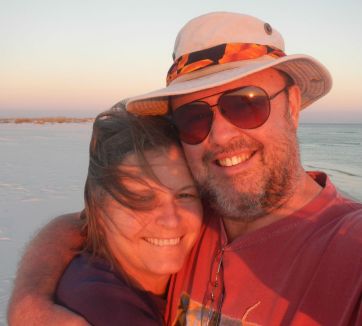
Travel writers. Foodies. Music lovers. Can’t go anywhere without our dog. Josephine Matyas works full-time as a freelance writer, specializing in travel and food. Craig Jones has got street cred: lots of miles on the road crisscrossing Canada as a professional musician, followed by just as many years tapping away at a computer keyboard.

JoCraig

It’s been an experiment: Taking her expertise (travel writing) and his experience (on the bandstand, teacher and writer), stirring it together and seeing what happens. Add a camper van (a 20-foot Leisure Travel Class B, for those who need the specs), an easy going Border Collie (Eleanor Rigby), a file full of maps and a GPS nicknamed “Hal” that sometimes toys with us (we prefer the maps).

Several times a year we pack up High Cotton (the Class B RV), take the dog for her trim, top up the gas tank and hit the road for a month or two at a time. We post links to articles we’ve published (see Words) and blog short bits and pieces while we are away from Home Base (Ontario, Canada).