We love museums and exhibits curated with care. We never pass up a chance to visit one – and some of them are worth more time than we can give them. In no particular order, some of the best we’ve seen include:
B.B. King Museum and Delta Interpretive Center (Indianola, Mississippi) is built onto an old cotton gin where young Riley (that’s his real name) ran a tractor as a boy before evolving into Blues Boy King … and the rest is history. Before his passing in 2015, B.B. King made substantial contributions from his personal archives, and it hugely enhances the experience for the visitor. Indianola is not “on the beaten path” – it’s between Greenwood and Greenville in the Delta – but it’s well worth any detour. We rate this a three-hour museum: it’s text and artifact heavy, including his personal papers, video clips and even his 60s-era tour bus. Musicians will want an extra hour to salivate over the guitars.
Otis Redding Foundation and Mini Museum (Macon, Georgia) keeps burning the flame of this foundational soul singer. The small streetfront exhibit includes memorabilia and newspaper clippings but is the front end for an educational foundation created before Reddings’ 1967 death (age 26) and is lovingly managed by his widow Ms. Zelma Redding and daughter Karla. Look for a big event in the autumn of 2016 to commemorate his legacy on what would have been his 75th birthday. Take a walk to the bronze statue of Redding at Gateway Park in Macon.
STAX Museum of American Soul Music (Memphis, Tennessee) is another text and exhibit-heavy museum with a story that combines tragedy and triumph. Booker T. & the M.G.s were the STAX house band, providing tracks and arrangements for soul and R&B giants including Sam & Dave, Otis Redding, Rufus Thomas, Albert King, Isaac Hayes (also one of the in-house writers), The Staple Singers, Wilson Pickett and countless others. You’ll get a lot more out of this experience if you familiarize yourself with the history of Memphis at the height of the STAX years, which is just before the 1968 assassination of Dr. Martin Luther King Jr.
Sun Studio (Memphis, Tennessee) lays credible claim to being the birthplace of rock ’n’ roll. Give him his due, Sam Phillips had an ear for music and knew talent when it walked through his door. Among the names associated with this modest little recording studio are Jerry Lee “The Killer” Lewis, Roy Orbison, Carl “Blue Suede Shoes” Perkins, Johnny Cash and The King himself, Elvis Presley. This venue is considerably smaller than the STAX Museum, but you too may want to get down on your knees and kiss the X on the floor where, legend has it, Elvis recorded Hound Dog. Bob Dylan did. Purists may want to fondle the guitar amplifier that fell off the roof of the truck – damaging the speaker cone – that became the sound of Ike Turner’s Rocket 88 … the very first rock ’n’ roll song, depending on who you talk to.
The Earl Scruggs Center (Shelby, North Carolina) invites you to leave your banjo jokes at the door and open your mind to the story of this hardscrabble sharecropper’s son who became an international sensation. Scruggs did for the banjo what Jimi Hendrix did for the electric guitar: he showed what was possible. The Center, which opened in early 2014, is a state of the art tribute to the man, his art and the history of Cleveland County. The displays are rich with archives that span several generations, including original instruments, video clips, interviews and very engaging interactive displays (e.g. you can learn to play the banjo through a touchscreen or call up photographic images of musicians from the times). If, at the end of a couple of hours touring this excellent and well organized history of Scruggs’ life, you still feel the need to crack wise with the banjo jokes, you’ll at least have seen the full majesty of the other side. Highly recommended: but give yourself enough time to fully explore all the exhibits and spend some time with the banjo “petting zoo.”
Alabama Music Hall of Fame (Tuscumbia/Muscle Shoals, Alabama) will surprise you – as it did us – with the richness of its musical legacy. To take just a few of the better known names; Hank Williams, Lionel Richie, Martha Reeves, Wilson Pickett, Percy Sledge, Nat King Cole, Emmylou Harris and Jimmie “The Singing Brakeman” Rodgers. Turns out that a lot of great 20th century music – blues, rock, gospel, country, soul, funk and pop – came out of Alabama. In addition to the Hall of Fame portraits there’s a wealth of musical artifacts including early sheet music belonging to W.C. Handy (Father of the Blues) and the Southern Star tour bus belonging to the supergroup, Alabama.
Martin Guitar Factory (Nazareth, Pennsylvania). If you’ve listened to popular music in the last 100 years, you’ve heard a Martin guitar. Probably thousands of them. It is the most widely recorded guitar sound in the world because – for many millions of guitar purists and players – it is THE sound of an acoustic guitar. So you’ll love touring the Martin Guitar Factory in Nazareth, PA, where thousands of these beautiful instruments are lovingly produced for a worldwide market of pickers who grin. The tour takes you right onto the factory floor where you can see up close and personal the artful combination of cutting edge science with old fashioned finger-applied glue on wood. It is more interesting than words can capture, even for non-players, because the Martin sound so defines what the acoustic guitar has come to be. Whatever the genre of music, everyone will have heard Martin’s contribution to it.
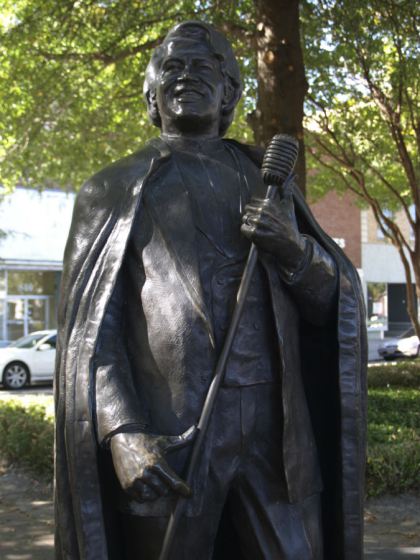
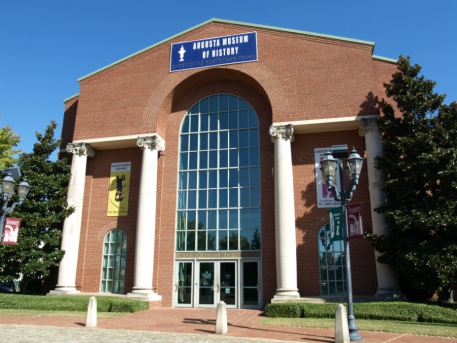
Augusta Museum of History (Augusta, Georgia) is a terrific museum with sufficient floor space to do justice to an impressive variety of exhibits relating to the history, culture and politics of this fascinating part of Georgia. Of particular interest to music fans is the impressive – and still growing – collection, The Godfather of Soul, Mr. James Brown. One of the founding fathers of funk was an Augusta native – and an American dream original – who started on the streets as a shoeshine boy and climbed his way, through sheer talent, vision and a singular work ethic, to become a world-straddling ambassador for black American soul music. Ranked seventh on Rolling Stone’s list of its 100 greatest artists of all time, “The Hardest Working Man in Show Business” performed to his very last days and sang with as much testosterone in his later years as he did as a young man. Collection highlights span video of his performances and groundbreaking dance moves, his colourful costumes and capes and an audio tour of memories of Mr. Brown as told by B.B. King, Jesse Jackson, Dan Aykroyd and Fred Wesley. Take your time with this exhibit: it’s worth savouring.
Delta Blues Museum (Clarksdale, Mississippi) is only steps from the fabled crossroads where, according to legend, Robert Johnson sold his soul to the devil. No less a blues personage than Billy Gibbons (singer/guitarist for ZZ Top) has taken an interest in this exhibit. Gibbons is a walking encyclopaedia of the blues and a devotee of McKinley Morganfield, better known as “Muddy Waters,” the “father of modern Chicago blues.” The museum actually contains remnants of the cabin where Muddy Waters lived on Stovall Farms during his days as a sharecropper and tractor driver. Best known for electrifying the blues in Chicago, Bill Gibbons had a timber from Muddy’s shack made into a guitar in his honour.
International Bluegrass Music Museum (Owensboro, Kentucky) is more than a shrine to Bill “The Father of Bluegrass” Monroe, though that would be deserved. Your classic bluegrass ensemble consists of guitar, mandolin, banjo, fiddle and upright or string bass. Everyone plays acoustic – no electric instruments – and players move into and away from the microphones in a studiously choreographed ritual that has the effect of putting every instrument where it needs to be precisely when it needs to be there. What’s cool about this place is that the exhibit collection includes mint condition posters from concerts going way back into the 20th century. Bluegrass has a rich history and some of the better known players are equal to or better than musicians in any other genre. Many audio performances have been preserved and can be sampled in this newer and lovingly curated shrine to bluegrass music.
The Big House (The Allman Brothers Band Museum) (Macon, Georgia) – think shrine – is where The Allman Brothers Band lived as a family and band from 1970 to 1973. The band has always operated as an extended family, and the house provided a place for that family – including roadies – to live, for the band to rehearse, write and record and for the culture of the ABB to flourish. The Big House is overflowing with memorabilia lovingly curated to draw you through various stages of the band’s evolution, including artifacts and photographs of Dickey Betts – one of the two original guitar players who left the band in 2000. Honestly, with this band you either get it or you don’t – but if you do, you MUST visit The Big House. Give yourself three hours and another hour for the gift shop. You can also take the music history walking tour with Rock Candy Tours to get all the behind-the-scenes info.
Musical Instrument Museum (Phoenix, Arizona) is the most impressive display of musical instruments from all over the globe you will see anywhere. It’s hard to overstate the impact of this site for music lovers. The exhibits are designed to be viewed with headphones that activate as you approach the individual displays organized by country or region. You get to hear and watch the instruments as they are designed to be played and hear them in the context in which they are usually used. The variety of plucking, striking, bowing, blowing and vibrating things is just staggering. Had you any doubt that music was fundamental to the human condition, this museum will put that doubt to rest. You’ll need two things above all to do this venue justice: very comfortable shoes – it’s a sprawling space – and several hours to absorb the enormous variety of exhibits.
The Blues Archive (Oxford, Mississippi) is a part of the University of Mississippi. The collection houses one of the largest blues music archives in the country, including donations by B.B. King (his entire personal record collection of more than 8,000 records kicked off the collection). The archive includes the first commercial blues recording, in 1920, a song called “Crazy Blues” recorded by Mamie Smith. If you contact the archive before you arrive, they can produce some early recordings for you and you can talk with the curator himself.
Highway 61 Blues Museum (Leland, Mississippi) is a more modest exhibit close to the historic intersection of Highways 10 and 61 (the corners are marked by striking wall-sized murals that tell some of the story of the blues in this part of Mississippi). In the early 20th century Leland was known as “the hellhole of the Delta.” Saturday night bluesmen played on corners and in clubs until daybreak while thousands of people came in from the surrounding plantations for an evening’s blowing off steam. The museum’s small, but historically significant collection includes photographs, sheet music, instruments and posters.
Elvis Presley Birthplace Museum (Tupelo, Mississippi) is the real thing - the small community where Elvis was born, spent his formative years and became steeped in a love for gospel. The museum’s quiet grounds include the two-room, shotgun style house—on its original site, restored to circa-1935—where Elvis was born during the Great Depression, the family’s Pentecostal church and a state-of-the-art museum filled with artifacts and audio-visual clips. The church community is where Elvis learned to sing and play guitar. He was passionate about his first love, gospel music.
The W.C. Handy Museum (Florence, Alabama) was established to celebrate the life of musician and composer William “W. C.” Handy (1873-1958), the “Father of the Blues.” Handy himself donated the seed money to set up the museum, which now includes several buildings and houses a large collection of memorabilia, personal items, and objects relating to his musical career. If you want to “go to the source” you’ll find your way to Florence. And while there, check out FAME recording studios in nearby Muscle Shoals.
Country Music Hall of Fame and Museum (Nashville, Tennessee) is a shrine to the American dream: small town boy or girl discovers in themselves a rare and precious talent; pays their dues in the hardscrabble honky-tonks and bars clawing their way to a spot on the Grand Ole Opry before ascending to the summit of country music recognition on these hallowed floors in downtown Nashville. Truly, it’s a pretty impressive collection of exhibits with something for everyone. Those who only want to see the stage costumes – or luxed-out limosines — of the latest and greatest won’t be disappointed. Those more interested in the long history of this American art form will be rewarded too. Got some time to linger? Visit RCA Studio B, the recording home of historic music titans including Elvis Presley (more than 250 songs recorded here), Chet Atkins, Eddy Arnold, and the Everly Brothers.