Category Archives: music destinations

Bristol, Virginia presents: The Birthplace of Country Music Museum

The final stretch. We’ve finished up our fall road trip by being totally immersed in American roots music. The last leg of our six-week journey took us to Bristol, Virginia – the “birthplace of country music” and home to the brand new, Smithsonian affiliate, Birthplace of Country Music Museum. It’s a main stop on Virginia’s musical journey along The Crooked Road, a heritage music trail into the southwest part of the state.

In this part of the U.S., they like to joke that “country music was conceived in Galax, born in Bristol . . . and went to Nashville to die.”

In the early 20th century Bristol – a city that straddles the Tennessee/Virginia state line – was one of dozens of little cities connected to larger metropolitan areas by rail and telegraph lines. Surrounded by dozens of smaller communities and settlements in this part of the Appalachians, these mountains were home to thousands of dirt-poor sharecroppers, labourers and small merchants and their families whose lives revolved around churchgoing and childrearing.

In 1927 music producer Ralph Peer from New York’s Victor Talking Machine Company brought recording equipment to Bristol on the urging of Earnest “Pop” Stoneman who claimed that the hills around Bristol were literally alive with music. Using street posters, word of mouth and newspaper ads, Peer and Stoneman managed to attract dozens of hill people to Bristol where Peer recorded his archive of Americana. The resulting 1927 Bristol Sessions have entered the history books as the “Big Bang of Country Music”: the moment when technology, talent, luck and circumstance captured what would become the quintessentially American blend of gospel, folk and country music.

The museum, which opened in August 2014, is a magnificent monument to The Bristol Sessions and the times from which they emerged. We began with the short, high quality film that set the context of the sessions, introduce the key personalities and explain their motives and methods. A second film – aimed at the music geeks – explains the finger-picking styles captured in these seminal recordings. A third film traces the intertwining of The Bristol Sessions and the music that was rooted in the church. The final movie theatre experience looks at the enduring influence on contemporary country music, with concert footage splashed onto enormous, surround screens. We got a fill of Willie, Rita, Faith and a host of others.

The whole museum experience is immersive. You can’t walk these beautiful floors or enjoy this artfully curated exhibition without picking up a sense of the impact of these recordings on the world of music in following years.

A separate, special collection goes deep into the history and family connections of The Carter Family – Maybelle, A.P. and Sara – whose subsequent careers, together and separately, with children and spouses, elevated the Carters to the status of the “first family of country music.”

Give yourself several hours and read everything. It’s a world-class museum that manages to mix state-of-the-art displays with a down home feel. We loved every minute of our visit – and it was a fitting way to end our music-infused fall road trip.

Thanks Bristol! We’ll be back again.

Virginia’s Crooked Road: The Carter Family Fold

From North Carolina we crossed into Virginia – we wanted to finish up the last part of The Crooked Road Music Trail. We’d travelled a large part of the Crooked Rod last fall but we wanted to add two stops: the Crater Family Fold and the newly-opened Birthplace of Country Music Museum. The Crooked Road is a fantastic heritage music trail that winds through southwest Virginia. It was one of our favourite experiences on our fall 2013 travels through the roots of American music.

So, off we went to Bristol, Virginia. A winding mountain road 45 minutes north of the city took us to The Carter Family Fold in Hiltons, VA; the wellspring, as it were, from which this first family’s music flowed. It was here that A.P. Carter collected songs and ran a dry goods store – now a small museum of the family itself – and where we visited the Carter Family Memorial Museum Center, a thoroughly modern 800-seat performance auditorium cut into the side of a hill which has hosted country music troubadours since opening in 1976.

The music of the Carter Family was “like water rippling in a sweet, clear spring off Clinch Mountain,” enthused Johnny Cash who married Maybelle Carter’s daughter June and performed for the last time on this stage in July 2003.

The Carter Family burst onto the national scene through a famous 1927 recording session called The Bristol Sessions (“The Big Bang of country music”). They were the first time the music of the mountains had been recorded for popular distribution. Through a combination of luck and good marketing, the Carter Family parlayed those Bristol recordings into a radio empire that nearly covered the continental United States from Mexico. “It was said that you could pick up the Carter Family on the barbed wire and straight-razor in this part of the country,” explained Dr. Joe Smiddy who plays guitar and banjo when not serving on the Carter Family Foundation.

So, on a Saturday night the cars and pickups stream into Hiltons, park in a nearby field, and visitors pack the seats at the Carter Family Fold. Every Saturday night without fail. It’s old-time music and bluegrass only on this stage, played on the authentic instruments – fiddle, guitars, mandolins, banjo and bass – and flatfooting on the hardwood down front. Kids, parents and grandparents share the dance floor. Everyone in this area seems to play something. Music – and the community experience of song and dance – is deeply integrated into the lives of these mountain people.

“It’s therapeutic,” Smiddy said, “this is physical therapy, it’s immunity, it’s a sense of joy. You can dance, you can sing along, you can learn some new songs. It’s real – and a whole lot of people come here to find what’s real.”

Before the dancing starts the master of ceremonies welcomes the crowd and does a short inventory of visitors, encouraging them to call out their home states and countries. For some, it’s a pilgrimage to the source of the music that has moved them all their lives.

“The thing about this music,” Smiddy mused, “is that you can play it well into your later years.” Long after the appeal of rock ’n’ roll has worn off, this music can still draw an audience. The walls of the auditorium are papered with pictures and framed posters of the Carter Family and their numerous musical descendants, related and unrelated. There are people in this audience, Smiddy told us, that have been coming every Saturday night for 35 years.

In this part of the country, the Carter Family looms large. And with good reason.

Asheville: Loophole of the Bible Belt

Oh, could most tourist destinations learn a thing or two from Asheville, North Carolina. This mid-size city in the Appalachian Mountains has lots going for it, not the least of which is the stunning scenery. On the urban end, the city’s energized and funky downtown core offers up a nice mix of used bookstores, speciality shops and independently-owned bars and restaurants. And most of it is dog friendly too. Rigby was welcomed into one store after another – especially the Three Dog Bakery where the sign on the door informed customers, Owners on Leash Welcome.

The locals like to joke about liberal-leaning Asheville being “the loophole in the Bible Belt.” There’s lots to see and do, including music, although we focused our time in the city on food, walking, soaking in the architecture and enjoying the work of local artisans. Our highlights? Read on . . .

Art Deco: Downtown is a mix of beautifully restored heritage buildings – with the nation’s largest collection of Art Deco architecture outside of Miami.

Southern eats: Even the funky-style eateries support the culture and heritage of the Southern mountains. We ate a great meal at Early Girl Eatery with its all-day breakfast and Southern standards on the menu (biscuits and gravy, fried green tomatoes, shrimp and grits and a North Carolina specialty, grilled pimento cheese sandwich).

Asheville Bee Charmer: Think all things bee-related and you get the idea. The new Bee Charmer has two locations, one in the heart of town and the other in the up-and-coming arts district of West Asheville. Owner Jillian Kelly is 100 per cent committed to connecting with ethical beekeepers around the world. The shop’s warmly- glowinghoney tasting bar is a blast and a way to try before you buy while learning a little about the intricacies of bees and honey production. If it’s about bees, Jillian knows it all.

Battery Park Book Exchange & Champagne Bar: We love most bookstores but we really, really loved Battery Park on Page Avenue (right in the centre of town). A visit is like slipping into a good friend’s sumptuously-decorated living room – couches and chairs, artwork on the walls, thick Persian rugs, table lamps – with the addition of thousands of (mainly) used books filling rows and rows of tall shelves. Music softly plays in the background (“we’re a conversational bar”) and well-behaved dogs are welcome. Owner Thomas Wright quips that he is “selling buggy whips” but we were instantly hooked. Oh yeah, there’s a well-appointed bar that serves champagne and wine. So comfortable, it was hard to leave.

Song of the Wood: A short drive outside Asheville is the stunning home and workshop of hammered dulcimer maker, Jerry Read Smith. Jerry is a skilled artisan and gracious host who loves to talk music, craft and woodworking to anyone with an appreciation for fine workmanship. He showed us his latest commission – number 950 in a long career than spans three decades. “Every single aspect of it makes a difference. A mahogany bridge will be different than a rosewood bridge,” he says. “The more you play it, the better it stays in tune.” For those who don’t have a clue what a hammered dulcimer is, take a look and listen at his excellent website (tip: it’s a percussion string instrument with about 100 strings in five octaves). He describes the unique sound best when he says: “Every note rings as long as it wants to. I think of it as music set free.”

Biltmore Estate: This magnificent piece of architecture – at 250 rooms it is America’s largest house – is a peek into how the .001 per cent live. The estate built by George Vanderbilt in 1895 stretches across 8,000 acres, getting in and out involves parking and shuttle rides and once you are in the estate home you will be agog at the antiques, furnishings, architecture and lifestyle. It’s an Asheville must-see.


Music jams along North Carolina’s Bluegrass Trails

The Carolina foothills have long been a centre of musical innovation and cross-cultural fusion. In this area of gently rolling hills, music and dance hold a place in the traditions of the community.

Enter the community jam. We were fortunate enough to visit several – and there are literally dozens of regular musical get-togethers. We’ve written about the excellent Earl Scruggs Center in Shelby, NC – if you are ever in the area it is worth a detour and several hours of your time. We gained a whole new appreciation for banjos and bluegrass and were eager to seek out spots we could hear more local players. We were not disappointed.

Fletcher
Because we really needed to see how the magic of bluegrass rolls out, we stopped in the town of Fletcher where, on a Monday night, we caught the open jam at the Feed & Seed: “A Family Friendly Live Music Venue that doubles as a church.” And it works.

This barely renovated, century-old feed and seed warehouse is now a non-denominational storefront church lovingly overseen by Pastor Phillip Trees. On Friday and Saturday nights bluegrass bands take to the stage (there’s a waiting list) and dancers practice their traditional Appalachian clogging (aka: flatfooting). Monday nights the church provides a home for the open community jam.

What we found was an evening of people immersed in the music of their lives and sharing their love of playing with anyone who walks through the door. This all-ages, all-faiths, event brings out the best in everyone.

We counted no fewer than 10 banjos, at least as many guitars, a doghouse (bass) and a sprinkling of violins (“fiddles,” y’all), resonator guitars and mandolins. There was even – cue the hairy eyeball – an electric bass on the bandstand. The average age was – oh, 65-70 – and there must have been 25-30 jammers all awaiting their turn and at least as many in the audience, cracking up, singing along and generally soaking up the vibe.

Pastor Trees has bands for his weekend shows lined up to play on his excellently appointed stage and sound system (two 20th-century Altec Lansing Voice of the Theatre speakers). The sound is terrific: warm and surrounding but not loud. Can’t make it to the Feed & Seed for a Monday night jam? You can stream the evening on your home computer. The cameras get turned on, the musicians fire the link to their Facebook friends and within a minute people are tuning in from all over the world.

As Pastor Trees says: “We’re free-giving back to the community.”

Drexel
In the Drexel Barber Shop, we crowded around a cluster of older men cradling a banjo, a mandolin, a resonator guitar, a guitar and a bass. Carroll Anthony’s dad – who carried his guitar into war with General Patton’s 3rd army – started this jam in 1964 and some combination of players and singers has been gathering here weekly since.

“He started strumming his guitar between haircuts,” Anthony explained. “Well, the chief of police played a mandolin. He started coming in and he’d pick a little bit. He’d get a call and have to take off. So he finally started leaving his mandolin at the shop. Joe came in and started playing banjo with them and it progressed from there. Today there are 30-40-50 people every Saturday morning.”

“These guys just love it. I couldn’t pay ’em to come here,” he explained. “They just love doing it.”

The sign in the barbershop says Pickin’ & Trimmin’ and that’s exactly what happens. Herbert Lambert – an 87-year old Second World War veteran – sat hunched over his mandolin.

“You’ll think he’s asleep, tobacco juice be drippin’ out of his mouth,” someone whispered, “but he’ll play here all day and go somewhere else to play all night.” Lambert plays circles around men 30 years younger. The back room is decked out with bluegrass memorabilia, posters of Bill Monroe, tributes to musicians who have visited, retired instruments adorn the walls and a circle of chairs for audience members close to the wood stove. It’s not fancy. It’s authentic.

There is no routine, no order of songs: one person starts up a melody and everyone else jumps in, takes their turn soloing, and comps along to the end. Visitors are welcome to sit in, youngsters are encouraged, singers are appreciated. Any skill level is welcome, as are players of any age. Most people play two or three instruments – some very well – and the whole spirit is about having fun and sharing the experience of making music.

Brevard
We loved the small town of Brevard (and not just because the incredibly efficient, family-owned – 100 years and counting – Eldridge Motors repair shop replaced our failed alternator with almost no notice). The new town library is great (it’s where we get lots of work done), there’s a world-class music school in town (the Brevard Music Center) and the downtown is neat and tidy with lots of interesting shops, including O.P. Taylor’s toy shop with one of the largest Lego inventories ever. The forests and waterfalls around Brevard have been used for movie shoots, including the first instalment of The Hunger Games.

We headed for the Silvermont bluegrass jam, started 32 years ago by local Harley Raines, sitting on his front porch. Things have grown and on Thursday nights the musicians and audience members crowd into a side room at the Silvermont, a heritage home that is now a community centre for seniors.

They jam here for the same reasons as everywhere else: for the pure enjoyment of playing and to keep the mountain music traditions alive. It’s mainly bluegrass and old-time, gospel mixed with a little bit of country.

Marion
The regular Friday night jam in the small village of Marion is named after a longtime local musician: Woody’s Original Mountain Music. Doors open at 6 pm and the music starts an hour later. Admission is free. Bands sign to be in the lineup and the list is posted up front. No one ever knows how many bands will show.

People were as interested in who we were and where we were from as we were about their fierce protection of traditional Appalachian mountain music.

The jam opens with a short prayer, led by Pastor Collins. Before and after, his wife mans the dessert table – thick calorie-laden slices of pie and cake fly off the shelf at 50 cents apiece. The goal is to keep the whole evening affordable.

The town is small but this event draws a regular crowd. Seats were quickly filled and new chairs are hustled to the sides. All were accommodated. The music and good vibes flow freely.

More info: Blue Ridge Music Trails of North Carolina

Banjo + Shelby = Earl Scruggs

The banjo warrants a lot more respect than it generally gets. The place to learn this – if you doubt us – is the Earl Scruggs Center in Shelby, North Carolina. The instrument came to America in the holds of slave ships: like many other imports, it was taken up and embraced by the Irish/Scots settlers and remade into a distinctly American phenomenon. And of the many who have picked out a song there is no one with the stature of homeboy Earl Scruggs (1924-2012). This hardscrabble son of a sharecropper did for the banjo what Jimi Hendrix did for the electric guitar: he showed everyone what was possible.

Shelby is at the hub of the Blue Ridge Music Trails of North Carolina, which wind through the foothills of the state. This region produced more than its share of country, bluegrass, old-time and gospel music – and the fusing of these styles gave rise to a uniquely American sound and sensibility. Performed at the level of execution that Scruggs and someone like comedian Steve Martin achieve, it is nothing short of breathtaking to listen to. If your first impression of Earl Scruggs calls to mind the theme music of the Beverly Hillbillies, well, okay. Flatt and Scruggs have impressed themselves into popular music and culture forever.

But the three-finger rolling style that Scruggs innovated — “ten notes per second with a melody in the middle of it” — transformed that instrument and launched, with Bill Monroe, a style that finds a massive worldwide audience and paved the way for next generation innovators like Béla Fleck, the jazz banjo virtuoso.

The Earl Scruggs Center does justice to his music and history. Centred in downtown Shelby, it is a state of the art exhibition – complete with a banjo petting zoo – that brings you into Scruggs’ life, his art and his politics.

Your first encounter is with the instruments of his childhood, behind glass, where you see his fathers’ guitar and violin. Music, you discern, was their only form of entertainment growing up in the hill country around Shelby.

The Center tells this story in multiple interactive ways. You can strum an electronic banjo or guitar at a large interactive digital video table where you can also isolate individual tracks to hear them out of context from the music. You can review the history of early bluegrass – from the union of Bill Monroe and Earl Scruggs – and then trace the history of Earl through his opposition to the Vietnam War and his fusion of his cherished bluegrass with the rock music of his sons, in the Earl Scruggs Review, in the early 1970s. It’s fascinating and sobering and you come away with a whole new respect for the man and the music.

The coolest thing about Scruggs was that he carried the music he loved all his life into every change that came through his life – “chasing the light,” as he described it, never letting his fingers rest until he picked his last roll.

ALSO IN THE AREA:

  • The Don Gibson Theater is an intimate (400 seats), soft-seat concert and film venue. Don Gibson is best known for his country hit, I Can’t Stop Loving You, which has been recorded by more than 700 artists.
  • The local Alston Bridges BBQ serves pulled pork with a vinegar-based sauce (true North Carolina style), hushpuppies and their signature red slaw (ketchup is the secret addition).

Georgia’s rich music history: Athens and Augusta

Cool things come out of university towns. The critical mass of students questing for identity and meaning, the energy of artists looking to push their own – and your – boundaries, the enabling atmosphere of a major learning institution in an era of political and cultural ferment – this combination is likely to give rise to innovations some of which will proceed to transform far beyond the municipal boundaries of their city of origin. So it is with Athens, site of the University of Georgia at Athens (UGA) and home to at least two (so far) institutions of the 20th century’s music scene: The B-52s and R.E.M.

Athens seems like a cool place to live. It’s certainly a cool place to visit. The city seems to grow out of the university grounds – which are lovely, spacious and extravagant. It’s a big city on a human scale. Lots of funky coffee shops, restaurants and bistros, bars featuring live music, a couple of cool bookstores, comic stores and used vinyl and CD outlets (including the famous WUXTRY – Georgia’s oldest independently-owned record store – where the members of R.E.M. would congregate). These co-exist on pleasantly shaded streets with upper-end shoe, clothing and sunglasses shops making for a pleasant walking experience. We did a tour with Paul Butchart, a local historian who gives Walking Music Tours of Athens’ rich musical history. Like everywhere else, live music venues opened and closed and relocated and went under at a furious pace – but out of this at least two major institutions attained escape velocity and transformed a corner of popular music.

athensblog6

I did make a point, some years ago, of doing some serious listening to Michael Stipe, et al., – who emerged from various university courses at UGA to form R.E.M. These guys produced album after album of intelligent rock music. From their punk roots playing the dives and student bars in Athens, they grabbed a significant share of critical and popular appeal and rode it to its natural conclusion. When the band realized they had attained all there was to attain in pop stardom, they wound it up. What they left behind is a catalogue of excellent, insightful, danceable and thoughtful rock and roll music. Whatever the various members do next, they can be proud of R.E.M.’s legacy of music and politics.

Augusta became the home of The Godfather of Soul, Mr. James Brown. Here’s a guy with a legacy to astound. Is there another figure from the 20th century who lived long enough to put his stamp on so many different styles of music? His legacy touches rock, blues, R&B, rap, hip-hop and, of course, soul.

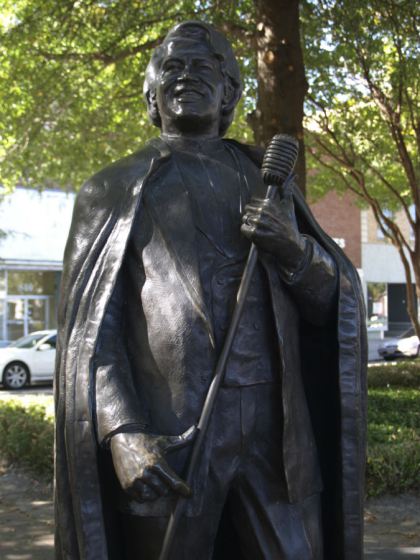
Not bad for a former shoeshine boy from the streets of Augusta. His life size statue stands on the centre of the boulevard on downtown Broad Street.

athensblog3

Of course James Brown – they call him “Mr. Brown” in Augusta – showed promise very early. From there it was just a matter of turning talent into opportunity, but if Brown had anything other than talent it was vision: a crystalline conviction of what his sound and stage deportment was all about.

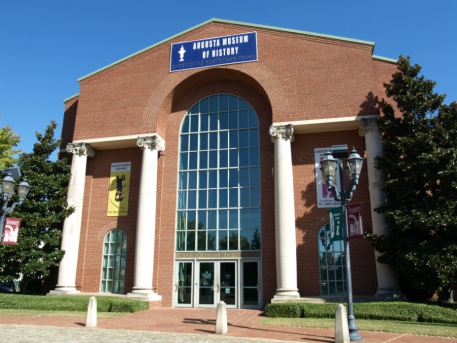
You can divine some of this at the Augusta Museum of History where they have curated a James Brown exhibit that takes you from his early youth to the final performance of his unnaturally long career. A few tidbits:

  • 95% of his stage suits and costumes were handmade.
  • He often played 300 shows a year.
  • He was the originator of “starting on the one.”
  • He was a self-taught musician with a love for gospel music.
  • He had perfect pitch.
  • He was a highly religious man.
  • He had a full hair salon in his home.
  • The dance moves he created circa 1968 were later copied by Michael Jackson and Justin Timberlake.

athensblog7

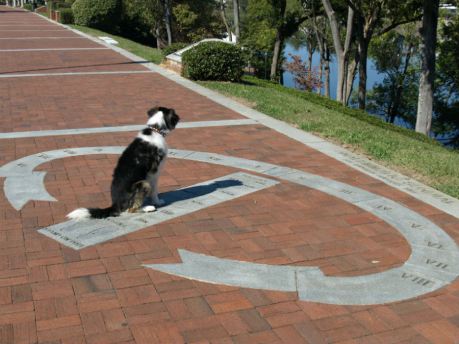
There’s lots more to see in Augusta too. This was – before the Civil War – a prosperous economic crossroads through which cotton and various other commodities passed en route to the ports of Savannah and Charleston. In the course of its economic development, wealthy families injected their fortunes into some pretty impressive – even by today’s standards – real estate and architecture. Well worth seeing. As is the lovely Riverwalk that features a perfect little amphitheatre looking over the river.

athensblog2

athensblog1

***

EATING & SLEEPING IN ATHENS: We stopped for lunch on the dog-friendly patio at Big City Bread Cafe for a delicious Turkey Burger with a side order of Bleu Cheese Fries (yes, house cut fries topped with blue cheese and served with garlic aioli and scallions).

athensblog5

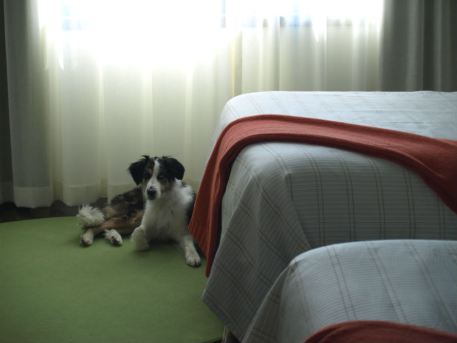
We bypassed the campgrounds and stayed overnight at the dog-friendly, LEED Gold Certified Hotel Indigo, a short walk to the downtown Athens area. The service was great and the beds even better!

athensblog4

LOCAL LEGENDS FROM AUGUSTA:

  • Ty Cobb retired in Augusta
  • Bobby James brought Masters level golf to Augusta
  • James Brown, Oliver Hardy, Butterfly McQueen, Laurence Fishburne and Brenda Lee are all from Augusta.

WATCH THE THEATRE: The film Get On Up (2014) is about the life of Mr. James Brown.

Macon: “Something in the water”

Travelling from north to south our focus was on sticking as close to the coastline as possible and experiencing everything that is unique about where salt water meets land – from shrimp boats to lighthouses to incredible stretches of wild beach.

Once we hit the borderline at Georgia-Florida, we bounced back northward, but on the return trip we headed inland, looking for music destinations and regional food highlights. Boy, did we ever find a goldmine at the small city of Macon, Georgia!

There’s a word for it: SYNERGY. It’s that magic moment when – for reasons no one fully understands – the total is greater than the sum of its parts. This happens all the time, but occasionally breaks out with transformative impact. Macon is one of those places where – at a particular moment – big things happened because the stars aligned.

It brings to mind the establishment of Capricorn Records in 1969 and the recording of the first Allman Brothers Band album. Although not a commercial success at the time, the record has since come to be seen, in the words of one critic, as “the best debut album ever delivered by an American blues band, a bold, powerful, hard-edged, soulful essay in electric blues with a native Southern ambience.” More to the point, the record put Macon on the map as the preferred destination for what would come to the called Southern Rock.

Craig savoured the displays at The Big House, a lovingly curated collection of thousands of articles – instruments, clothing, hand-written lyrics, posters, tickets and rooms of furnishings. The Big House is the spiritual and actual home of the original Allman Brothers Band – the members lived and worked from here communally in the early 1970s. It is now a museum of all things ABB.

But Macon has other claims to boast too: it’s the city that birthed Little Richard and Otis Redding. This is an incredible amount of world-class talent for such a small city (population: 90,000). The locals like to joke that “it must be something in the water.”

Of Otis Redding there is much to say. He died at the peak of his considerable power, age 26, when his plane went down en route to a gig. But the 300 songs in his catalogue and the stamp he put onto R&B and soul music have long out-lived him. It’s ironic that his best-known song – (Sittin’ On) The Dock Of The Bay – is so unlike most of the other songs in his catalogue, and that he never got to perform it. The plane crash that took his life was a mere three days after he recorded the piece. It was his biggest hit and his first million seller. But you have to see a performance, perhaps from his tour of the United Kingdom, of Try A Little Tenderness so see how this man could bring an audience to frenzy.

We had the chance to sit down with Redding’s daughter, Karla Redding, who reminisced about her dad. “My favourite piece is Love Man,” she said. “Because it’s a pure description of the man he was.” Karla spoke of his commitment to family first and foremost and his obsession with ice cream (especially butter pecan). After we left the Otis Redding Foundation and Mini-Museum we went to the waterfront to see the statue of Redding.

“Little Richard,” Wayne Penniman, is authoritatively one of the founders of rock ’n’ roll. In his induction to the Rock and Roll Hall of Fame, Ringo Starr jokingly blames “Little Richard” – for whom they opened in Hamburg – for the sound and stage energy of The Beatles. No less a figure than Mick Jagger claimed that he “couldn’t believe the power of Little Richard onstage. He was amazing.” Richard’s life story exceeds anything in fiction: he veers in and out of several near encounters with death, finds Jesus, loses him, finds him again and is condemned and honoured along the way for being so far ahead of his time. At this point in time there is no Macon museum dedicated to Little Richard . . . but, who knows what’s coming soon?

We finished up our incredible Macon stay at the H&H Soul Food Restaurant. The H&H was a favourite of “starving musicians” who found friendly faces (and meals) in the original co-owners “Mama” Inez and “Mama” Louise. It’s a Macon institution, an authentic “meat & three” as these traditional Southern eateries are called. The menus offer a meat – from meatloaf to fried chicken – and a choice of three sides (mac & cheese, fried okra, sweet potatoes, collards, etc.). The Allman Brothers members ate here as did Otis Redding when he was a member of Johnny Jenkins’ Pinetoppers. The locals like to call the women who founded the H&H “the Matriarchs of Macon’s historical music scene.”

Topped it all off with a great overnight at the Lake Tobesofkee Arrowhead Campground just 15 minutes outside of town. Spotlessly clean, well maintained sites and dark, dark, dark at night.

Music museums you don’t want to miss

We love museums and exhibits curated with care. We never pass up a chance to visit one – and some of them are worth more time than we can give them. In no particular order, some of the best we’ve seen include:

B.B. King Museum and Delta Interpretive Center (Indianola, Mississippi) is built onto an old cotton gin where young Riley (that’s his real name) ran a tractor as a boy before evolving into Blues Boy King … and the rest is history. Before his passing in 2015, B.B. King made substantial contributions from his personal archives, and it hugely enhances the experience for the visitor. Indianola is not “on the beaten path” – it’s between Greenwood and Greenville in the Delta – but it’s well worth any detour. We rate this a three-hour museum: it’s text and artifact heavy, including his personal papers, video clips and even his 60s-era tour bus. Musicians will want an extra hour to salivate over the guitars.

Otis Redding Foundation and Mini Museum (Macon, Georgia) keeps burning the flame of this foundational soul singer. The small streetfront exhibit includes memorabilia and newspaper clippings but is the front end for an educational foundation created before Reddings’ 1967 death (age 26) and is lovingly managed by his widow Ms. Zelma Redding and daughter Karla. Look for a big event in the autumn of 2016 to commemorate his legacy on what would have been his 75th birthday. Take a walk to the bronze statue of Redding at Gateway Park in Macon.

STAX Museum of American Soul Music (Memphis, Tennessee) is another text and exhibit-heavy museum with a story that combines tragedy and triumph. Booker T. & the M.G.s were the STAX house band, providing tracks and arrangements for soul and R&B giants including Sam & Dave, Otis Redding, Rufus Thomas, Albert King, Isaac Hayes (also one of the in-house writers), The Staple Singers, Wilson Pickett and countless others. You’ll get a lot more out of this experience if you familiarize yourself with the history of Memphis at the height of the STAX years, which is just before the 1968 assassination of Dr. Martin Luther King Jr.

Sun Studio (Memphis, Tennessee) lays credible claim to being the birthplace of rock ’n’ roll. Give him his due, Sam Phillips had an ear for music and knew talent when it walked through his door. Among the names associated with this modest little recording studio are Jerry Lee “The Killer” Lewis, Roy Orbison, Carl “Blue Suede Shoes” Perkins, Johnny Cash and The King himself, Elvis Presley. This venue is considerably smaller than the STAX Museum, but you too may want to get down on your knees and kiss the X on the floor where, legend has it, Elvis recorded Hound Dog. Bob Dylan did. Purists may want to fondle the guitar amplifier that fell off the roof of the truck – damaging the speaker cone – that became the sound of Ike Turner’s Rocket 88 … the very first rock ’n’ roll song, depending on who you talk to.

The Earl Scruggs Center (Shelby, North Carolina) invites you to leave your banjo jokes at the door and open your mind to the story of this hardscrabble sharecropper’s son who became an international sensation. Scruggs did for the banjo what Jimi Hendrix did for the electric guitar: he showed what was possible. The Center, which opened in early 2014, is a state of the art tribute to the man, his art and the history of Cleveland County. The displays are rich with archives that span several generations, including original instruments, video clips, interviews and very engaging interactive displays (e.g. you can learn to play the banjo through a touchscreen or call up photographic images of musicians from the times). If, at the end of a couple of hours touring this excellent and well organized history of Scruggs’ life, you still feel the need to crack wise with the banjo jokes, you’ll at least have seen the full majesty of the other side. Highly recommended: but give yourself enough time to fully explore all the exhibits and spend some time with the banjo “petting zoo.”

Alabama Music Hall of Fame (Tuscumbia/Muscle Shoals, Alabama) will surprise you – as it did us – with the richness of its musical legacy. To take just a few of the better known names; Hank Williams, Lionel Richie, Martha Reeves, Wilson Pickett, Percy Sledge, Nat King Cole, Emmylou Harris and Jimmie “The Singing Brakeman” Rodgers. Turns out that a lot of great 20th century music – blues, rock, gospel, country, soul, funk and pop – came out of Alabama. In addition to the Hall of Fame portraits there’s a wealth of musical artifacts including early sheet music belonging to W.C. Handy (Father of the Blues) and the Southern Star tour bus belonging to the supergroup, Alabama.

Martin Guitar Factory (Nazareth, Pennsylvania). If you’ve listened to popular music in the last 100 years, you’ve heard a Martin guitar. Probably thousands of them. It is the most widely recorded guitar sound in the world because – for many millions of guitar purists and players – it is THE sound of an acoustic guitar. So you’ll love touring the Martin Guitar Factory in Nazareth, PA, where thousands of these beautiful instruments are lovingly produced for a worldwide market of pickers who grin. The tour takes you right onto the factory floor where you can see up close and personal the artful combination of cutting edge science with old fashioned finger-applied glue on wood. It is more interesting than words can capture, even for non-players, because the Martin sound so defines what the acoustic guitar has come to be. Whatever the genre of music, everyone will have heard Martin’s contribution to it.

Augusta Museum of History (Augusta, Georgia) is a terrific museum with sufficient floor space to do justice to an impressive variety of exhibits relating to the history, culture and politics of this fascinating part of Georgia. Of particular interest to music fans is the impressive – and still growing – collection, The Godfather of Soul, Mr. James Brown. One of the founding fathers of funk was an Augusta native – and an American dream original – who started on the streets as a shoeshine boy and climbed his way, through sheer talent, vision and a singular work ethic, to become a world-straddling ambassador for black American soul music. Ranked seventh on Rolling Stone’s list of its 100 greatest artists of all time, “The Hardest Working Man in Show Business” performed to his very last days and sang with as much testosterone in his later years as he did as a young man. Collection highlights span video of his performances and groundbreaking dance moves, his colourful costumes and capes and an audio tour of memories of Mr. Brown as told by B.B. King, Jesse Jackson, Dan Aykroyd and Fred Wesley. Take your time with this exhibit: it’s worth savouring.

Delta Blues Museum (Clarksdale, Mississippi) is only steps from the fabled crossroads where, according to legend, Robert Johnson sold his soul to the devil. No less a blues personage than Billy Gibbons (singer/guitarist for ZZ Top) has taken an interest in this exhibit. Gibbons is a walking encyclopaedia of the blues and a devotee of McKinley Morganfield, better known as “Muddy Waters,” the “father of modern Chicago blues.” The museum actually contains remnants of the cabin where Muddy Waters lived on Stovall Farms during his days as a sharecropper and tractor driver. Best known for electrifying the blues in Chicago, Bill Gibbons had a timber from Muddy’s shack made into a guitar in his honour.

International Bluegrass Music Museum (Owensboro, Kentucky) is more than a shrine to Bill “The Father of Bluegrass” Monroe, though that would be deserved. Your classic bluegrass ensemble consists of guitar, mandolin, banjo, fiddle and upright or string bass. Everyone plays acoustic – no electric instruments – and players move into and away from the microphones in a studiously choreographed ritual that has the effect of putting every instrument where it needs to be precisely when it needs to be there. What’s cool about this place is that the exhibit collection includes mint condition posters from concerts going way back into the 20th century. Bluegrass has a rich history and some of the better known players are equal to or better than musicians in any other genre. Many audio performances have been preserved and can be sampled in this newer and lovingly curated shrine to bluegrass music.

The Big House (The Allman Brothers Band Museum) (Macon, Georgia) – think shrine – is where The Allman Brothers Band lived as a family and band from 1970 to 1973. The band has always operated as an extended family, and the house provided a place for that family – including roadies – to live, for the band to rehearse, write and record and for the culture of the ABB to flourish. The Big House is overflowing with memorabilia lovingly curated to draw you through various stages of the band’s evolution, including artifacts and photographs of Dickey Betts – one of the two original guitar players who left the band in 2000. Honestly, with this band you either get it or you don’t – but if you do, you MUST visit The Big House. Give yourself three hours and another hour for the gift shop. You can also take the music history walking tour with Rock Candy Tours to get all the behind-the-scenes info.

Musical Instrument Museum (Phoenix, Arizona) is the most impressive display of musical instruments from all over the globe you will see anywhere. It’s hard to overstate the impact of this site for music lovers. The exhibits are designed to be viewed with headphones that activate as you approach the individual displays organized by country or region. You get to hear and watch the instruments as they are designed to be played and hear them in the context in which they are usually used. The variety of plucking, striking, bowing, blowing and vibrating things is just staggering. Had you any doubt that music was fundamental to the human condition, this museum will put that doubt to rest. You’ll need two things above all to do this venue justice: very comfortable shoes – it’s a sprawling space – and several hours to absorb the enormous variety of exhibits.

The Blues Archive (Oxford, Mississippi) is a part of the University of Mississippi. The collection houses one of the largest blues music archives in the country, including donations by B.B. King (his entire personal record collection of more than 8,000 records kicked off the collection). The archive includes the first commercial blues recording, in 1920, a song called “Crazy Blues” recorded by Mamie Smith. If you contact the archive before you arrive, they can produce some early recordings for you and you can talk with the curator himself.

Highway 61 Blues Museum (Leland, Mississippi) is a more modest exhibit close to the historic intersection of Highways 10 and 61 (the corners are marked by striking wall-sized murals that tell some of the story of the blues in this part of Mississippi). In the early 20th century Leland was known as “the hellhole of the Delta.” Saturday night bluesmen played on corners and in clubs until daybreak while thousands of people came in from the surrounding plantations for an evening’s blowing off steam. The museum’s small, but historically significant collection includes photographs, sheet music, instruments and posters.

Elvis Presley Birthplace Museum (Tupelo, Mississippi) is the real thing - the small community where Elvis was born, spent his formative years and became steeped in a love for gospel. The museum’s quiet grounds include the two-room, shotgun style house—on its original site, restored to circa-1935—where Elvis was born during the Great Depression, the family’s Pentecostal church and a state-of-the-art museum filled with artifacts and audio-visual clips. The church community is where Elvis learned to sing and play guitar. He was passionate about his first love, gospel music.

The W.C. Handy Museum (Florence, Alabama) was established to celebrate the life of musician and composer William “W. C.” Handy (1873-1958), the “Father of the Blues.” Handy himself donated the seed money to set up the museum, which now includes several buildings and houses a large collection of memorabilia, personal items, and objects relating to his musical career. If you want to “go to the source” you’ll find your way to Florence. And while there, check out FAME recording studios in nearby Muscle Shoals.

Country Music Hall of Fame and Museum (Nashville, Tennessee) is a shrine to the American dream: small town boy or girl discovers in themselves a rare and precious talent; pays their dues in the hardscrabble honky-tonks and bars clawing their way to a spot on the Grand Ole Opry before ascending to the summit of country music recognition on these hallowed floors in downtown Nashville. Truly, it’s a pretty impressive collection of exhibits with something for everyone. Those who only want to see the stage costumes – or luxed-out limosines — of the latest and greatest won’t be disappointed. Those more interested in the long history of this American art form will be rewarded too. Got some time to linger? Visit RCA Studio B, the recording home of historic music titans including Elvis Presley (more than 250 songs recorded here), Chet Atkins, Eddy Arnold, and the Everly Brothers.

Myrtle Beach: It’s not all golf and t-shirt shops

Could there be more of a contrast between the sleepy and secluded villages of Down East and the hustle of Myrtle Beach? While the t-shirt shops and entertainment-style attractions lining Ocean Blvd. (think: Ripley’s and wax museums) are not really our style, we were able to find lots of low key and authentic experiences in the Myrtle Beach area.

We set up camp at the excellent Huntington Beach State Park, just south of the city – an amazing mix of maritime forest, marshlands and pristine beachfront.

Almost immediately across the road is an area highlight, Brookgreen Gardens, a quiet escape from the busyness of Myrtle Beach’s Grand Strand. We took a long meditative stroll through the manicured grounds that tastefully blend art and formal gardens with a wild nature preserve across 9,100-acres of lowcountry South Carolina.

Railroad magnate Archer Milton Huntington and his wife Anna, a talented sculptor, built the gardens at Brookgreen in 1932 on land that was once a massive rice plantation. The grounds marry ponds and Southern gardens with hundreds of pieces of sculpture by some of America’s most celebrated artists.

Between Brookgreen and Myrtle Beach is the small seaside hamlet of Murrells Inlet, famous for its fishing docks and fresh seafood. We lunched dockside at The Wicked Tuna which boasts a one-of-a-kind fresh seafood experience – if by fresh you mean that the fish comes right off the boat, and is handed directly into coolers in the restaurant’s ground floor.

Chef Dylan Foster knows he’s got a good thing going. “Benefit is, we control the quality of the fish right from the ocean to the restaurant. It can be fished in the morning and on the plate for lunch. It’s ocean to table.”

We had the day’s local catch: delish blackened mahi mahi tacos served with guacamole, tomatillo salsa and topped with a crispy house slaw.

In town, a stone’s throw from the ocean-hugging Boardwalk, we sat down with Victor Shamah, owner of a Myrtle Beach music institution, The Bowery. Trademarked as “the eighth wonder of the world” it’s surely one of the last authentic honky-tonks in the lower 48.

“The Bowery is an old fashioned draft beer joint,” explained Vic, the owner for the last 34 years. “We sell just live music and draft beer. Alabama was our house band from 1973 to 1980 – they started here. They added country rock with a little more of a beat to it.”

It’s not uncommon for visitors like singer Mark Chestnut to walk out of the audience to join today’s house band for a song or two. And the boys from Alabama stop by on a regular basis. The Bowery is that kind of place. The music fires up around 8:30 pm and goes steadily until 1:30 am or later – no breaks. And the band plays everything requested by the audience, which means that in a very short period of time a band has learned – on the bandstand – a huge repertoire of music if they want to keep their gig. Regulars have been walking through the front doors for 30 or more years. It’s a one-of-a-kind honky-tonk where you come if you love live music and its particular blend of atmosphere and tap beer.

Just down the main street, the massive SkyWheel revolves to heights 187 feet above the Boardwalk, with views well up and down the Atlantic coastline. It was well worth the ride because things always make more sense when seen from above. For those with acrophobia, there’s a panic button installed in the ceiling of each separate compartment.

Finally, we topped off the day with an evening in the cushy seats at the Alabama Theatre for an evening of live, top-shelf music and comedy. We enjoyed their current show, One, which featured a selection of number one country, Motown, Broadway and R&B hits from the 20th century. The musicianship was excellent, featuring players who have toured with the biggest names in popular music, the singing and dancing were first rate and the comedy had the whole auditorium laughing at themselves and each other.

The next day, on the way out of town and headed down Highway 17 toward Charleston, we took a break at Pawleys Island Hammock Shops – a cluster of 22 household and gift stores best known for the original manufacturing site of the famous Pawleys Island hammock.

Had to take a break to check out the merchandise.

Music Trails: Cajun & Zydeco

It was a long, intense trip - six weeks and 9,000 km exploring the roots of American music across the Southeast states. By the end, it had been like following a serpentine music trail and we began to appreciate how the various musical genres were intertwined and cross-influenced. Craig’s fingers got a workout on his guitar, as he jammed and played with the talented musicians from old-time to Zydeco to the Delta blues. We had the time of our lives.

CAJUN & ZYDECO

Music is baked into the Cajun culture of Louisiana. At times, Cajun and Zydeco music protected a culture under siege. The songs tell stories of work, love, life, kids and the all-pervasive hurtin’ heart. We had our radio dial tuned to Bayou 106.7 out of Lafayette, “The Sound of Acadiana.”

Best musical stops: Lafayette (home to Vermilionville, Prejean’s and Randol’s), Saturday mornings at Fred’s Lounge, Savoy Music Center (especially the Saturday morning jam), Liberty Theater in Eunice, any dance hall anywhere

Backstory: The small communities across the bayou and prairie of southern Louisiana were largely isolated – both by harsh geography and language – and music was a way to stay close-knit, enjoy and let off steam. Louisiana is also the home of Creole, Cajun and Zydeco music, brought to the region by displaced French-speaking Acadians (or ‘Cajuns’). The traditions are alive and thriving in bars, dancehalls and dining establishments across the bayou waterways and the Cajun prairie north of Interstate 10.

New Orleans (NOLA) – at the mouth of the Mississippi and the entry point to North America for the Caribbean and South America – acted as a massive engine transforming and exporting music, people and culture in all directions. The city’s whorehouses gave birth to the first known publication of the word “jazz” in an advertisement for the Razzy Jazzy Spasm Band. All the music of the region is eventually drawn to the clubs and dance halls of New Orleans, and Cajun and Zydeco are no exception. But for the authentic Cajun experience, head out from The Big Easy and into the rural bayou and prairie.

Vermilionville – in Lafayette – features a large performance centre where we saw Goldman Thibodeaux and the Lawtell Playboys burn through hours of Creole-inspired dance music. In the middle of a Saturday, these all-ages events are where the elders teach their grandchildren the finer points of waltzing and two stepping. Like Zydeco, Creole music puts the microphone on the inside of the piano accordion whereas Cajun features a mic on the outside of a button accordion. Creole has a lot of blues in it while Zydeco tends to be more uptempo and often in English. Traditional Cajun music is filled with French lyrics.

Next door to Vermilionville, the Jean Lafitte National Historical Park Acadian Cultural Center tells the story of the Acadian expulsion (Le Grand Dérangement) in the 1750s and 60s from Nova Scotia, New Brunswick, Prince Edward Island and Maine and their resettlement in what became Louisiana. This ethnic cleansing was part of the long rivalry between the imperial British and French and the Cultural Center tells the sad story in detail. Make sure you tour the grounds and get a sense of the Acadians lived experience, talk to the interpreters and enjoy the interaction. We were able to sit down and spend time with an amazing fiddle player who was well into his 90s and still full of energy for his music.

On a Saturday morning at Fred’s Lounge in Mamou (the only day of the week they’re open) the rules are clear: absolutely no standing on the cigarette machine. Fred’s is the real deal. Get there by 9 am for the start of the broadcast on radio 1050AM and find a place to stand before the bleary-eyed crowd moves in and the energy-filled two stepping pushes you ever farther from the band, which is roped off in the middle of the room. Take a tour of the signage, all hand-drawn, have a Caesar or three, but don’t try to keep up with the regulars. The guy on the accordion might be the local chief of police. And don’t stand on the jukebox either.

Savoy Music Center in Eunice – overseen by instrument maker and archivist of Cajun culture, Marc Savoy – is a little sedate compared with Fred’s Lounge. Have a bite to eat or take a chair and indulge yourself in the spirit of sharing music. The Saturday morning jam – into its fifth decade – is a respectful gathering of young and old in which deference for the old timers is the expectation. Savoy himself is a product of the Cajun prairie, taught himself to play accordion as a child and has become one of the most sought-after instrument makers in the world (35-40 per year), when he’s not touring or recording with his family band. Study the collection of Marc’s personal wisdom posted on almost every surface and wall of his workshop and store.

Lafayette – Paul Simon sang: “Well, I’m standing on the corner of Lafayette / State of Louisiana / Wondering where a city boy could go / To get a little conversation / Drink a little red wine / Catch a little bit of those Cajun girls / Dancing to Zydeco.”

Randol’s and Prejean’s – in Lafayette – are where you go to be amazed at the dedication to dancing among these people, some of whom are considerably older than they look on the dance floor. And some are dancing with children considerably younger than themselves. And some are dancing by themselves because – dammit! – they came to dance. One elderly couple we met had been coming to Randol’s for 37 years – kibitzing with friends, dancing with strangers and generally soaking up the joie de vivre. We should all want to spend our golden years with such genuine smiles on our faces.

Liberty Theater/Rendez Vous des Cajuns (Eunice) – not far from the Savoy Music Center – is another venue from which a regular live radio broadcast is done every Saturday evening. The theatre was designed and built before the age of electronic sound reproduction so an ordinary voice from the stage can be heard anywhere in the room and the sightlines are great. People dance – of course they dance! – right up in front of the stage and below the band on the original hardwood floors. For a meager $5 – popcorn is extra – it’s a great way to pass a Saturday evening drinking in the local culture.

Classic artists and tunes:
Paper in My Shoe, Boozoo Chavis
Bon Ton Roula, Clarence Garlow
Les Haricots Sant Pas Salés, Clifton Chenier
It Ain’t Gonna Rain No Mo’, Zydeco Skillet Lickers
Zodico Stomp, Clifton Chenier